Category: JUDGMENT

  • From The Screwtape Letters—a fictional work written from a senior demon’s perspective, advising a junior tempter.

    Indeed the safest road to Hell is the gradual one—the gentle slope, soft underfoot, without sudden turnings, without milestones, without signposts,

    The Screwtape Letters
    C. S. Lewis

  • From The Screwtape Letters—a fictional work written from a senior demon’s perspective, advising a junior tempter.

    It is, no doubt, impossible to prevent his praying for his mother, but we have means of rendering the prayers innocuous. Make sure that they are always very ‘spiritual’, that he is always concerned with the state of her soul and never with her rheumatism. Two advantages will follow. In the first place, his attention will be kept on what he regards as her sins, by which, with a little guidance from you, he can be induced to mean any of her actions which are inconvenient or irritating to himself. Thus you can keep rubbing the wounds of the day a little sorer even while he is on his knees; the operation is not at all difficult and you will find it very entertaining. In the second place, since his ideas about her soul will be very crude and often erroneous, he will, in some degree, be praying for an imaginary person, and it will be your task to make that imaginary person daily less and less like the real mother—the sharp-tongued old lady at the breakfast table. In time, you may get the cleavage so wide that no thought or feeling from his prayers for the imagined mother will ever flow over into his treatment of the real one. I have had patients of my own so well in hand that they could be turned at a moment’s notice from impassioned prayer for a wife’s or son’s ‘soul’ to beating or insulting the real wife or son without a qualm.

    The Screwtape Letters
    C. S. Lewis

  • Imminent death sharpens Markel’s self-understanding, before God and the world. He acutely perceives the fall of humanity and his own particular place within this total picture. In this, Markel also perceives the deep interconnectivity of all people and things. The dividing line between himself and “the other” is being erased. In this way, his perception of his deep fallenness brings him neither maudlin wailing, nor pathos, nor self-loathing. Instead he experiences joy, compassion, and love. Having come to this awareness, he can’t comprehend how he ever lost his temper with anyone.

    How to Be a Sinner
    Peter Bouteneff

  • In the 1930s, someone asked the English writer and lay theologian G. K. Chesterton what was wrong with the world. He answered, “I am.”

    How to Be a Sinner
    Peter Bouteneff

  • The human mind is generally far more eager to praise and dispraise than to describe and define. It wants to make every distinction a distinction of value; hence those fatal critics who can never point out the differing quality of two poets without putting them in an order of preference as if they were candidates for a prize.

    —C.S. Lewis, The Four Loves

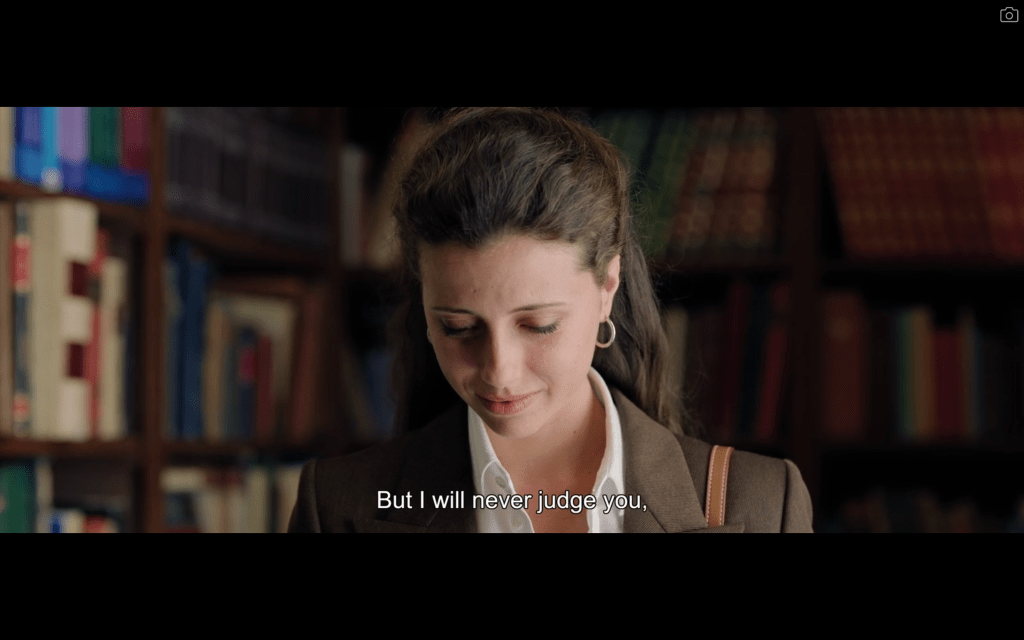
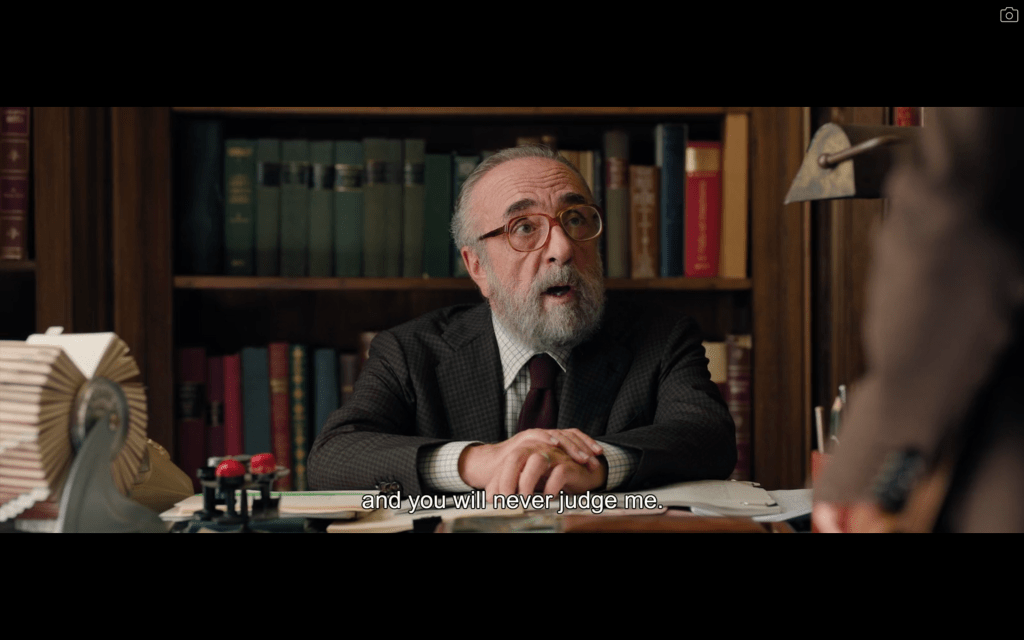
  • Parthenope (2024)
    A24

  • He looked at me in a reprimanding manner and whispered, “Mariam, do you know the circumstances of every person? I won’t reveal the secrets of this woman, but when you are targeted with a thought about something that does not concern you, tell yourself, ‘This is not my business; I should mind my own business.’”

    A Spring in Sinai: Hieromartyr Mina Abood: His Life, Miracles, and Martyrdom in Post-Revolution Egypt
    Anthony Marcos

  • Saint Macarius the Great said: “Judge yourself, my brother, before they judge you.” A father of of monks on the mountain of Nitria said to the saintly Pope Theopilus, “Believe me, my father, there is nothing greater than a person going back and blaming himself for everything.” You must then judge yourself first within your heart.

    The Life of Repentance and Purity
    H.H. Pope Shenouda III

  • Millions of people who are in hell wish for a few moments of life, which you have—just a few moments in which to repent—but cannot find them. They have lost the chance, and the door has been closed. How about you, my brother? You have all of this life, why do you not think about repentance, and grab the chance? As the apostle said: “Walk circumspectly….redeeming the time, because the days are evil” (Ephesians 5.16).

    Know that the postponement of repentance is one of the works of the devil, who does not want repentance. He knows that keeping you from repentance in a direct way is something your conscience will not accept. Therefore, he will never say to you, “Do not repent,” and yet every time your heart moves toward God, he will say to you, “That’s okay, but not now. We have many chances before us.” He then keeps leading you in a series of never-ending postponements until your life ends.

    —H.H. Pope Shenouda III, The Life of Repentance and Purity

  • When we see a person who has committed vicious sins and crimes escaping with impunity, we react with indignation. We want to see that person called to account and punished, and feel angry that this has not happened.  But at such moments we should reflect on our own actions; indeed we should turn that sense of indignation inward against ourselves.  Each of us should ask: “How many sins have I committed against others, when I have escaped with impunity?” There are, no doubt, many examples in all our cases. Recognizing this fact will cause our anger against others to melt away. More importantly, it will make us turn to God and ask forgiveness of these sins. Yet there is perhaps a difference between our own sins and the sins which we notice in others. Our own sins are probably quite subtle and inconspicuous, whereas the sins of others are obvious and gross. Should we, therefore, regard our own sins as less important or die? On the contrary, we should realize that subtle sins are frequently the most harmful. Obvious sins, such as robber and violence, are easily recognized, and so can often be guarded against by physical means. The more subtle sins, such as lying and slander and power-mongering are frequently hard to spot, and so difficult to prevent.

    On Living Simply
    St. John Chrysostom