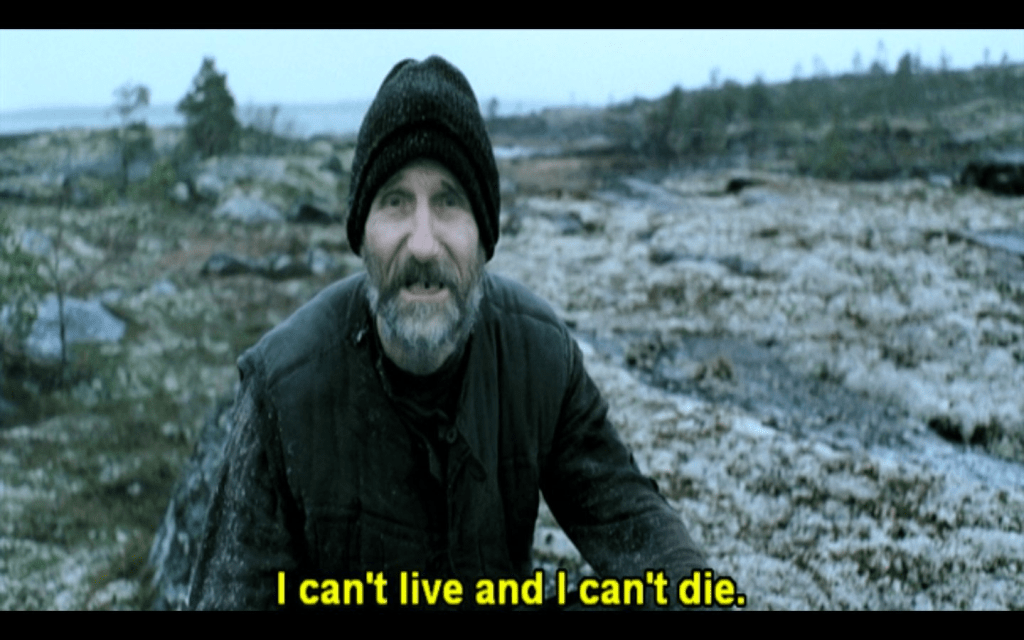
In hindsight, it’s incredible how trivial some of it seems. At the time, though, it was the perfect storm. I include wording like “impossible situation,” which was reflective of my thinking at the time, not objective reality.
Tim Ferriss on How He Survived Suicidal Depression and His Tools for Warding Off the Darkness
Category: SUICIDE
-
-
A source of spiritual death, despair can also lead a man to suicide: inciting him to no longer expect anything from life, it implants ideas of suicide in his soul and prompts him to accomplish them. In explaining this matter, St. John Chrysostom maintained the possibility of a demonic influence, but stressed that it was not the only cause, as he wished to once again insist on the responsibility of the individual himself. ‘These baneful thoughts’ he wrote to Stagirius, do not only come from the demon; your own melancholy is also very much to blame. Yes, indeed, this dark sadness even more than the evil spirit provokes these thoughts, and perhaps they are the only cause. It is certain that some individuals, quite apart from any demonic obsession, suffer from this mania for suicide after excessive suffering.
Mental Disorders & Spiritual Healing: Teachings from the Early Christian East
Jean-Claude Larchet -
The above explains why thoughts of acedia [despondency] can appear in apparently such contradictory ways: in the lukewarm, as sluggishness, indifference, and even depression, and in the conscientious and eager, as unrestrained activism and ascetical maximalism. If this vice is not healed by steadfast endurance and a life of discipline, combined with “tears before God” and constant short prayers, it leads to a complete standstill of the spiritual life and sometimes even suicide. Yet he who bravely and steadfastly passes the trials of this “noonday demon,” who “encompasses the entire soul and [threatens] to oppress the spirit,” emerges from these tests inwardly strengthened. Unexpectedly, those spiritual experiences from which he thought himself forever to be excluded are now revealed to him.
Dragon’s Wine and Angel’s Bread: The Teaching of Evagrius Ponticus on Anger and Meekness
Gabriel Bunge -
“Just as a man with fever has no right to commit suicide, so till our very last breath we must never give up hope.”
—St. John Climacus, The Ladder of Divine Ascent -
“You never get over it. But you get to where it doesn’t bother you so much.”
—Jeffrey Eugenides,The Virgin Suicides -
And if there’s one thing individuals considering suicide are short on, it’s patience—because of their willfulness. They’re like passengers aboard a transcontinental airplane flight who, halfway there, decide they can’t wait any longer to land, and want to jump out. Life is like that. It’s not finished yet, You don’t know the conclusion. The part of suicidal thinking that’s not so intelligent is deciding to judge life before you’ve let God in to heal it and make it meaningful.
—Dee Pennock, God’s Path to Sanity -
Let us too, beloved, as we know this, be always ready to be reconciled to our enemies. Let us not excuse ourselves with the fact that the other person does not want to be reconciled to us. Even if he does not want to forgive us, what is preventing us from forgiving him? If he wants to commit spiritual suicide through strife, is it wise for us to inflict the same misfortune upon ourselves?
How often in life one hears similar excuses: “How can I forgive him when he does not come to me? He is lesser than I; let him be the first to extend his hand for reconciliation! He offended me, that is why he must apologize first! I do not have anything against him, but if he does not want to make peace, I do not want to either. Who—I—to go first and ask for forgiveness?! Why should I be humiliated before him? What is he?
The Meaning of Suffering and Strife & Reconciliations
Archimandrite Seraphim Aleksiev -
What happens when a person, because of upbringing, fails in bonding with others, and is not able to form successful relationships? The person feels lonely, isolated, and estranged.
This isolation and estrangement passes through three stages:
The first stage [consists of] grumbling and distress, in which the person feels pain because he is alone, and feels that he is a stranger and has nobody to ask about him, and that nobody loves him. But he may [even] grumble against God, and say that the Lord does not love him, and may grumble against society wherein he lives. This person complains, because he has failed in making sound relationships. For this person to overcome this matter, he has to deal with this pain in a positive way, and from it, as an impetus, set out to form relationships and friendships with others, and then he can heal himself and grow in a sound way. If he does not do this, he will enter into the next stage.
The second stage is what we call, the building up of the feelings of grumbling against everything around him, because the feeling of the pain of loneliness persists for a long time. So you find him grumbling against God and others, and against home, church, and school.
As for the third stage, it is the most dangerous, in which the person feels that he does not deserve to live, and then he ends his life and reaches the point of [committing] suicide.
From the aforementioned, the importance of forming relationships is made clear, and [also] bonding with God and entering into a relationship with God, so he will bask in the warmth of His love, and will attain success in his life, as Joseph bonded with God, and therefore, Scripture says, “The LORD was with Joseph, and he was a successful man.”
—H.E. Metropolitan Youssef, How to Develop Your Personality