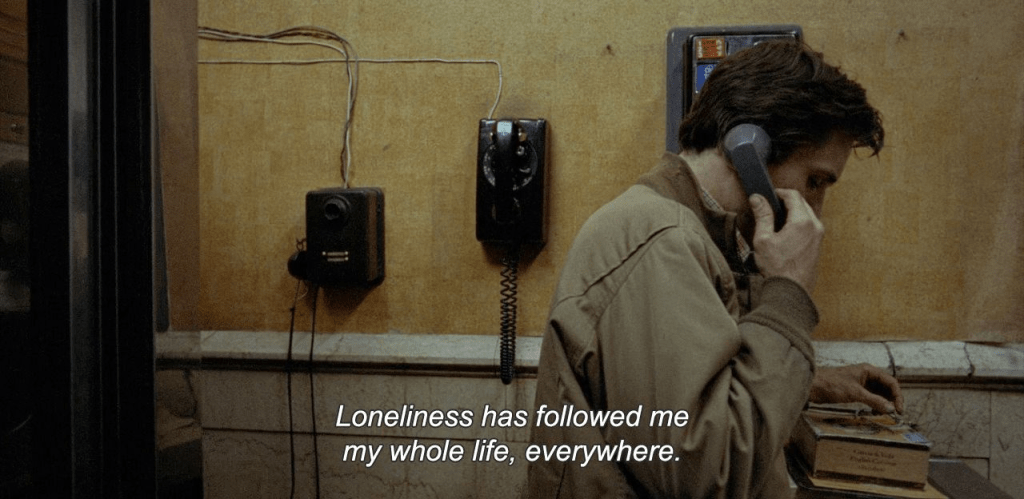
All these afflictions are worse when, through hatred of their toilsome failure, men have retreated into idleness and private studies which are unbearable to a mind aspiring to public service, keen on activity, and restless by nature because of course it is short of inner resources. In consequence, when the pleasures have been removed which busy people derive from their actual activities, the mind cannot endure the house, the solitude, the walls, and hates to observe its own isolation. From this arises that boredom and self-dissatisfaction, that turmoil of a restless mind and gloomy and grudging endurance of our leisure, especially when we are ashamed to admit the reasons for it and our sense of shame drives the agony inward, and our desires are trapped in narrow bounds without escape and stifle themselves. From this arise melancholy and mourning and a thousand vacillations of a wavering mind, buoyed up by the birth of hope and sickened by the death of it. From this arises the state of mind of those who loathe their own leisure and complain that they have nothing to do, and the bitterest envy at the promotion of others. For unproductive idleness nurtures malice, and because they themselves could not prosper they want everyone else to be ruined. Then from this dislike of others’ success and despair of their own, their minds become enraged against fortune, complain about the times, retreat into obscurity, and brood over their own sufferings until they become sick and tired of themselves.
—Seneca, On the Shortness of Life: Life Is Long if You Know How to Use It
Category: LONELINESS & SOLITUDE
-
-
We pass one another in the street, the one person looks like the other, and the other just like anyone else, and only the experienced observer suspects that, in that head, there lives a lodger who has nothing to do with the world, but lives out his lonely life confined to quiet domesticity.
Either/Or: A Fragment of Life
Søren Kierkegaard -
I do not think I am doing anything unworthy of my pen by recommending here that one take good care of keeping his fortune, whether inherited or acquired. For to possess enough to be able, even if one is alone and without a family, to live comfortably in true independence, that is, without working, is a priceless advantage: it grants one exemption and immunity from the miseries and torment attached to human life, as well as emancipation from the general chores which are the natural fate of the children of the earth. It is only by this favour of fate that one is truly a free born man, and really sui juris (his own master), master of his time and his powers, and able to say every morning: ‘The day belongs to me’. Also, between the man who has a thousand pounds of income and the man who has a hundred thousand, the difference is infinitely less than between the former and the man who has nothing. But inherited wealth achieves its highest value when it falls to the one who, endowed with superior intellectual powers, pursues enterprises that are not really compatible with having to earn one’s bread: he is then doubly favoured by fate and can live in full accord with his genius. He will pay his debt to humankind a hundred times over by producing what no one else could produce and giving it what will become its common good, while at the same time making it honourable. Another, placed in such a favoured position, will render himself worthy of humankind by his philanthropic works. Whoever, on the contrary, does nothing of this kind, who does not even try, if only once, as an experiment, to advance a science through serious studies, and does not give himself even the smallest opportunity of doing so, is merely a contemptible idler.
—Arthur Schopenhauer, ‘Aphorisms on the Wisdom of Life’In the Presence of Schopenhauer
Michel Houellebecq -
What a man is for himself, what keeps him company in solitude and that no one can give him or take from him, is obviously more important to him than what he can possess, or what he can be in the eyes of others. A man of wit, even in the deepest solitude, will find in his own thoughts and fantasies a perfect distraction, while the continual change brought about by society, plays, excursions and parties will be quite unable to ward off the boredom that tortures the fool.
—Arthur Schopenhauer, ‘Aphorisms on the Wisdom of Life’
In the Presence of Schopenhauer
Michel Houellebecq -
“Some women would be better off alone, but they feel they’ve got to get hold of someone to prove they’re worth while,” she said, sweeping the air with her arm and clapping her fist into her palm. “If they do decide to be alone, part of their loneliness will come from outside, rather than inside. Society will pity them, look down on them.”
The House by the Sea: A Journal
May Sarton